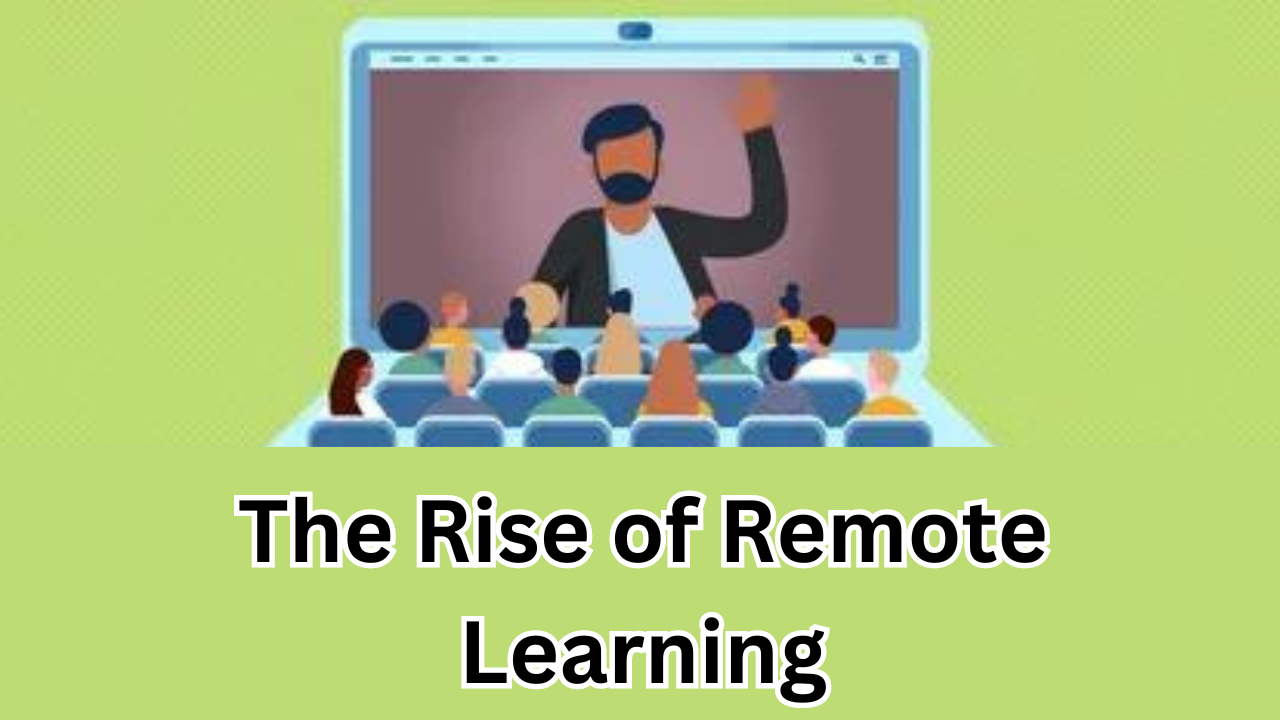
Remote learning has become a major player in the recent dramatic changes to the educational landscape. The global pandemic has contributed to a shift in education toward online learning which has transformed the traditional classroom setting by changing how teachers and students engage with course materials. Formerly viewed as an optional extra remote learning is now a crucial component of contemporary educational programs. The idea of hybrid education which combines in-person and online instruction is becoming more and more popular as we adjust to this shift. What therefore lies ahead for this developing model?
Remote Learning’s Rise and Its Challenges:
Owing to COVID-19 lockdowns which forced educational institutions to swiftly switch to online platforms remote learning grew rapidly. Online learning environments such as Zoom Google Classroom and Microsoft Teams have become indispensable. Traditional teaching methods were called into question as educators learners and parents had to navigate a new digital environment.
But there were some difficulties with this move. Getting dependable internet connections computers or even quiet study spaces was a challenge for many students especially those who came from underprivileged neighborhoods. With the rise of the digital divide disparities in access to high-quality education were brought to light. A lack of social interaction online fatigue and the loss of experiential learning which is especially problematic for subjects like science and the arts were other issues that both students and teachers had to deal with.
Remote learning has shown to be more than a Band-Aid solution even in the face of these obstacles. It has ushered in a new period of accessibility and flexibility in education. The lessons gained from remote learning will be expanded upon by Hybrid Education as we enter the post-pandemic era.
What is Hybrid Education?
Blended learning also known as hybrid education blends online and traditional classroom instruction. Under a hybrid model, students attend some classes in person and use digital platforms to complete some coursework remotely. With this method, students can take advantage of the flexibility that online learning provides as well as the benefits of in-person interaction with teachers and peers.
This model has been embraced by numerous colleges and universities as they move from completely remote setups to more balanced methods. Because hybrid learning addresses many of the drawbacks of pure remote learning while retaining its advantages it may be a more viable option for both educators and students.
Why Hybrid Education is Gaining Popularity:
- Flexibility and Accessibility: Flexible learning is one of the main benefits of hybrid education. With online components students have the flexibility to learn at their own pace which allows them to review challenging content and plan their studies around other obligations. This approach is great for working professionals because it lets them manage their time between school and work or family obligations.
- Cost-Effective: For both students and institutions hybrid learning can also result in lower costs. Hybrid education has the potential to lower overhead costs for schools by decreasing the requirement for physical space. Less in-person instruction can result in cheaper housing or transportation expenses for students which lowers the cost of education.
- Personalized Learning: More individualized instruction is made possible by technology. Students can access a multitude of resources including interactive simulations videos and quizzes that are catered to their individual learning styles through online learning platforms. Real-time tracking of student progress allows teachers to modify their lesson plans and provide prompt feedback.
- Improved Digital Skills: Students must be proficient with technology in an increasingly digital world. Through the development of these digital skills hybrid learning equips students for a future in which technological literacy will probably be necessary. Digital research using learning management systems and collaborating online are all essential skills that hybrid education improves.
Challenges Facing Hybrid Education:
Although the hybrid model has many advantages there are drawbacks as well.
- Technology Gaps: The digital divide is still a major problem. This can contribute to inequality since not all students have access to the high-speed internet or gadgets needed for online learning.
- Increased Workload for Educators: By having to prepare lessons for both online and in-person learning teachers in hybrid learning environments frequently double their workload. It can be difficult to guarantee that students are taking an equal amount of time in both formats.
- Maintaining Student Engagement: Student disengagement from hybrid models can occur occasionally, particularly in online environments where distractions are more common. Creative methods of online instruction are needed to guarantee student engagement and motivation in a hybrid setting.
The Future of Hybrid Education:
With that said hybrid education appears to have a bright future ahead of it. Virtual reality (VR) and artificial intelligence (AI) are two new tools that hybrid learning will probably incorporate more into its design as technology develops further making learning experiences more dynamic and immersive. For instance, virtual reality (VR) can be used to replicate real-world settings for courses in biology engineering or even history offering accessible hands-on learning opportunities.
Academic institutions will persist in allocating resources toward enhancing their digital infrastructure guaranteeing that virtual learning environments are intuitive captivating and open to all learners. In this new era of hybrid learning governments and private organizations may also intervene to close the technological divide and guarantee that no student is left behind.
Conclusion:
The rise of remote learning has reshaped the educational landscape, pushing institutions to rethink how education is delivered. While remote learning was born out of necessity, hybrid education has emerged as a sustainable, flexible model that blends the best of both worlds—online and in-person learning. As technology advances and educators refine their approaches, hybrid education could very well become the new standard, offering students more personalized, accessible, and engaging learning experiences. The journey has just begun, and the future of hybrid education holds immense possibilities.